Mobile applications as a strategy for engaging young people with science
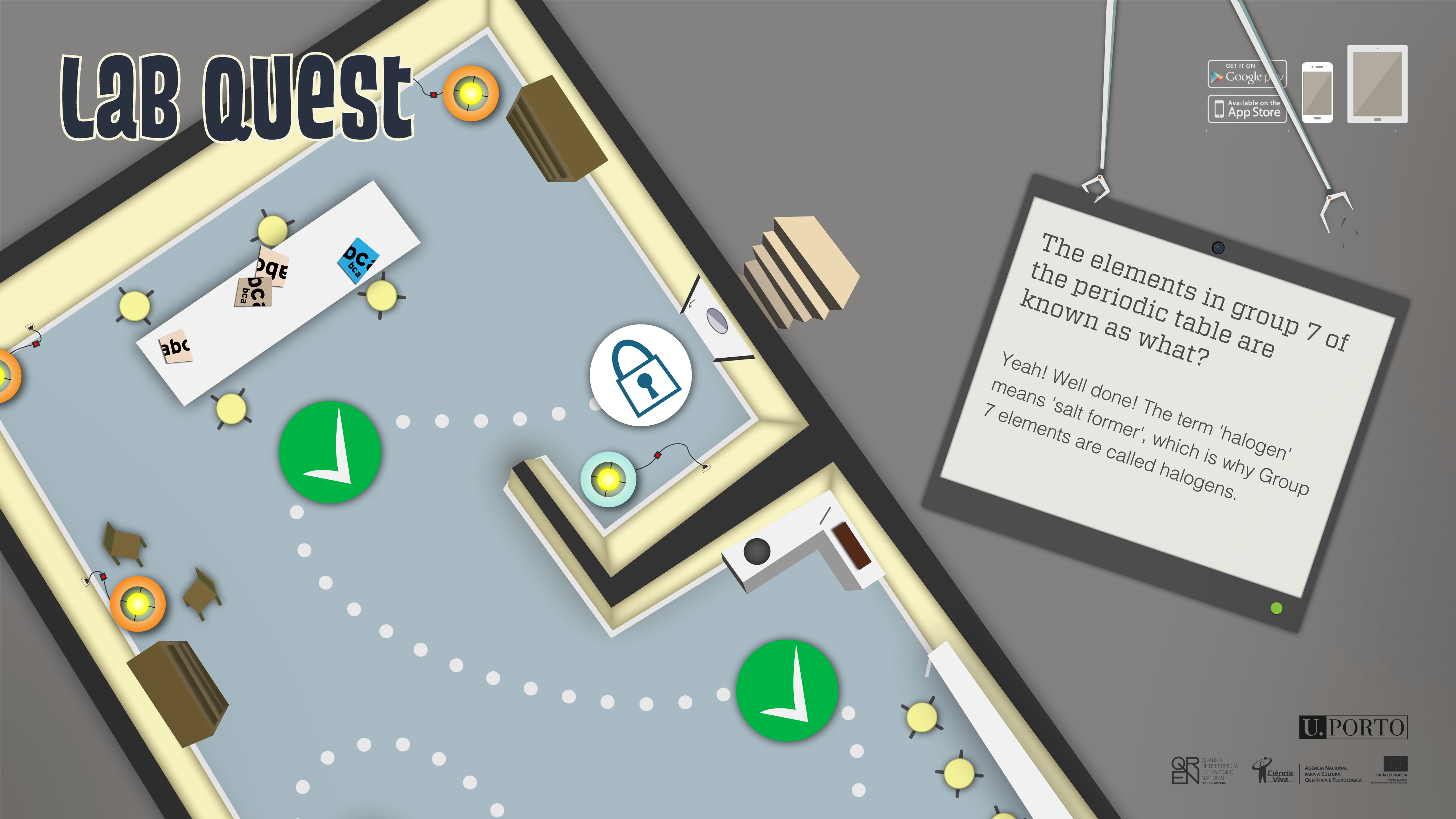
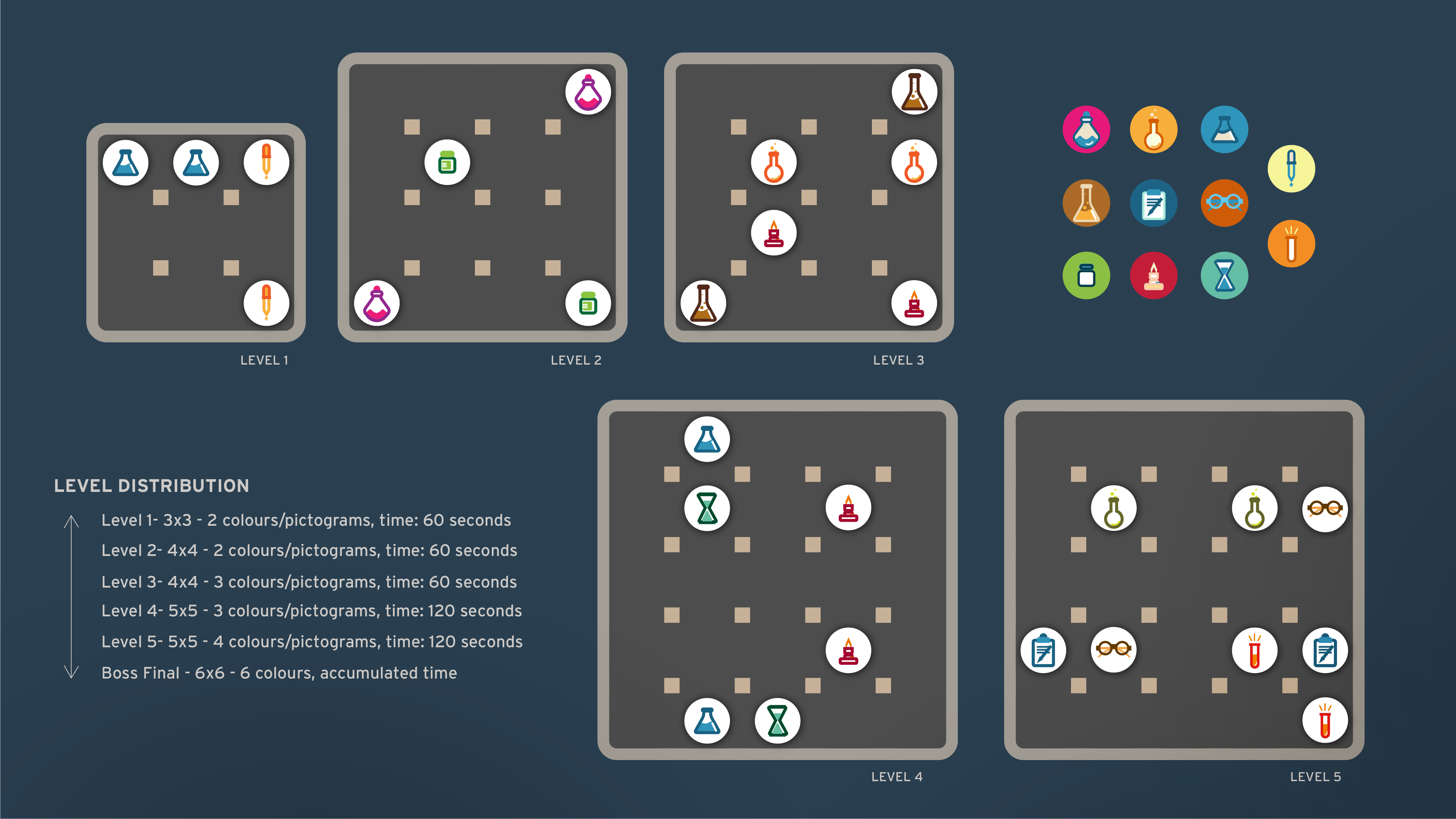
LabQuest is based on a story of an internationally awarded young scientist, Dr Bright, who was locked up in a laboratory by an envious co-worker: the 'crazy' Dr Cell.
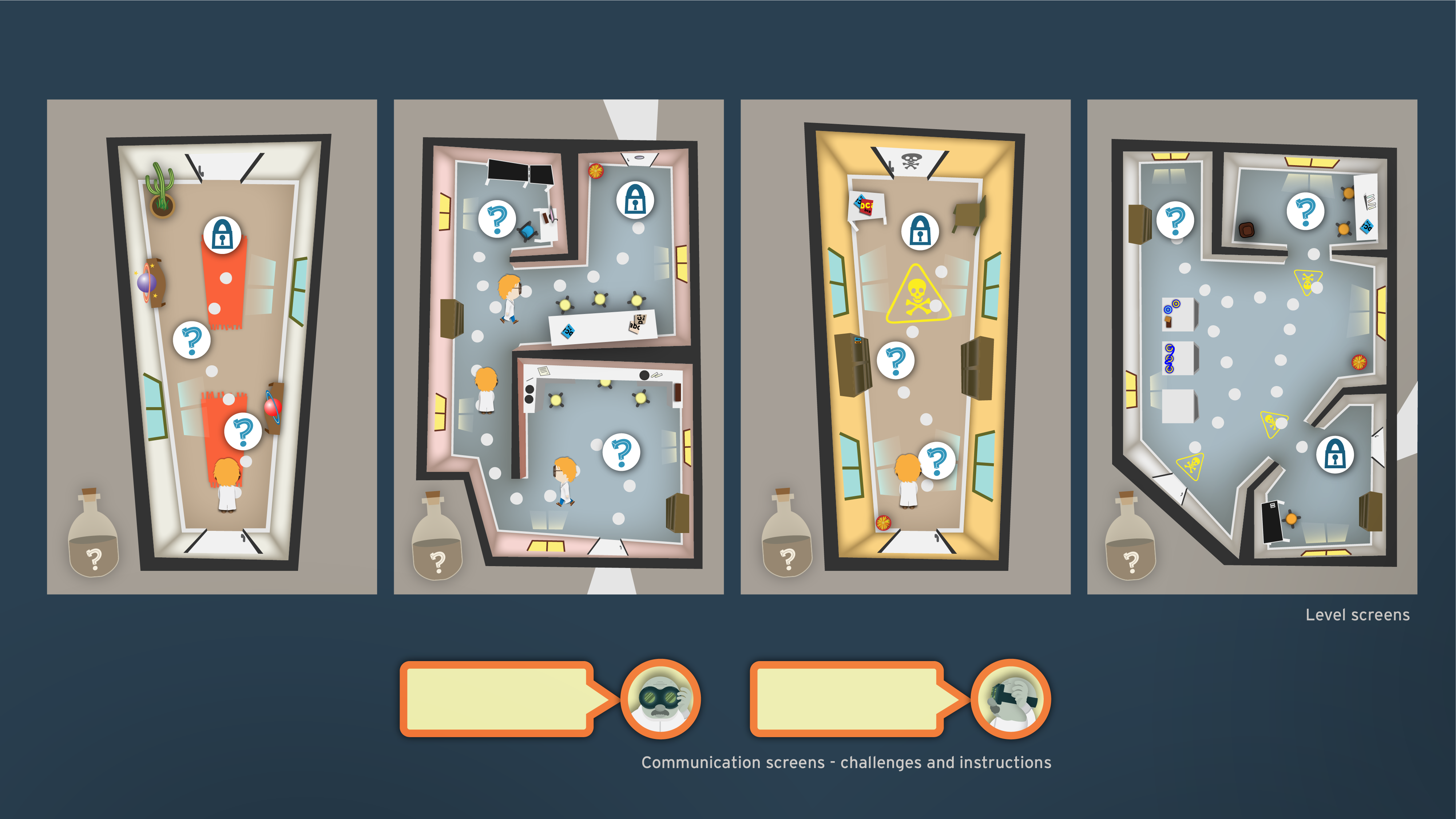
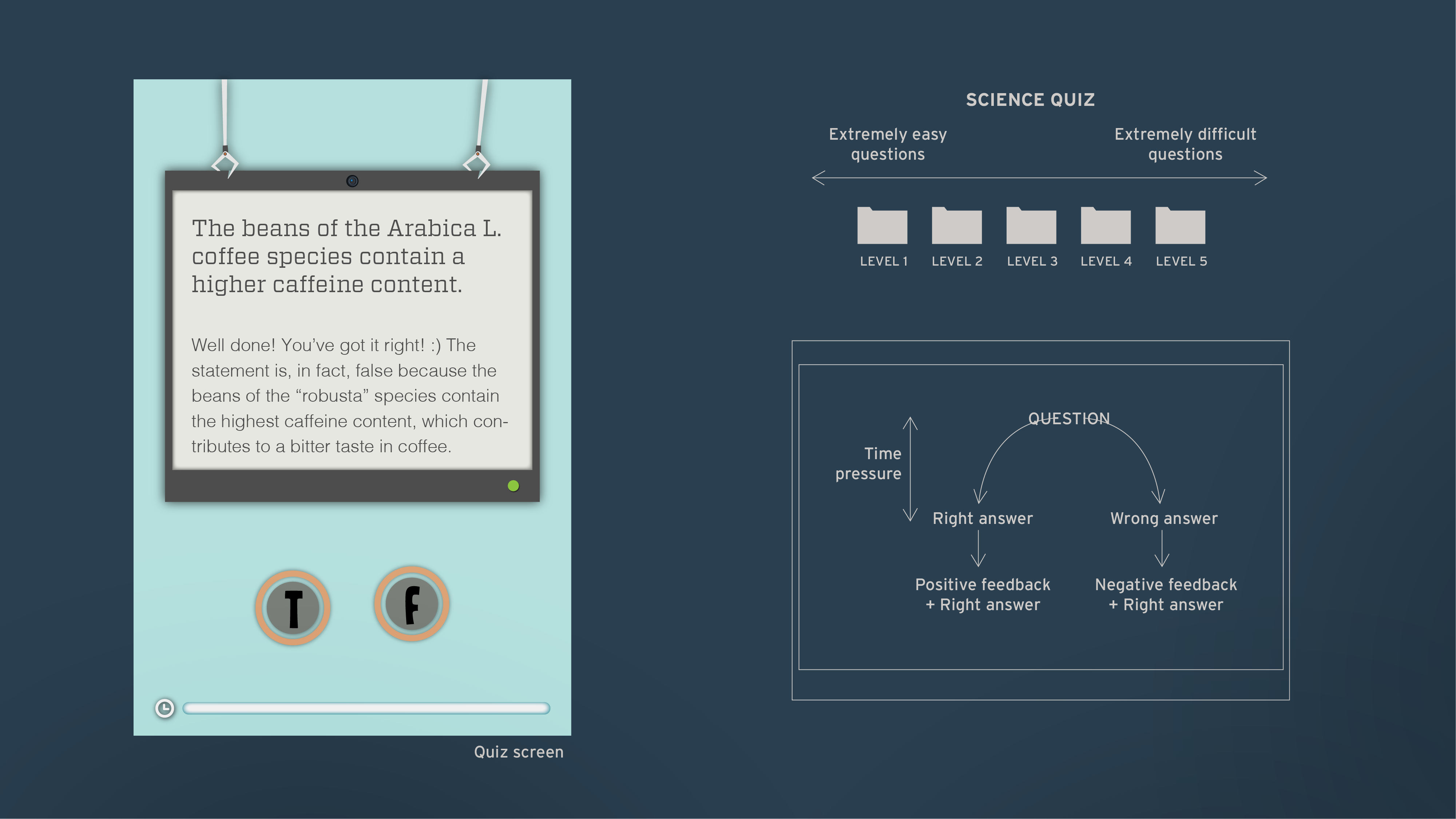
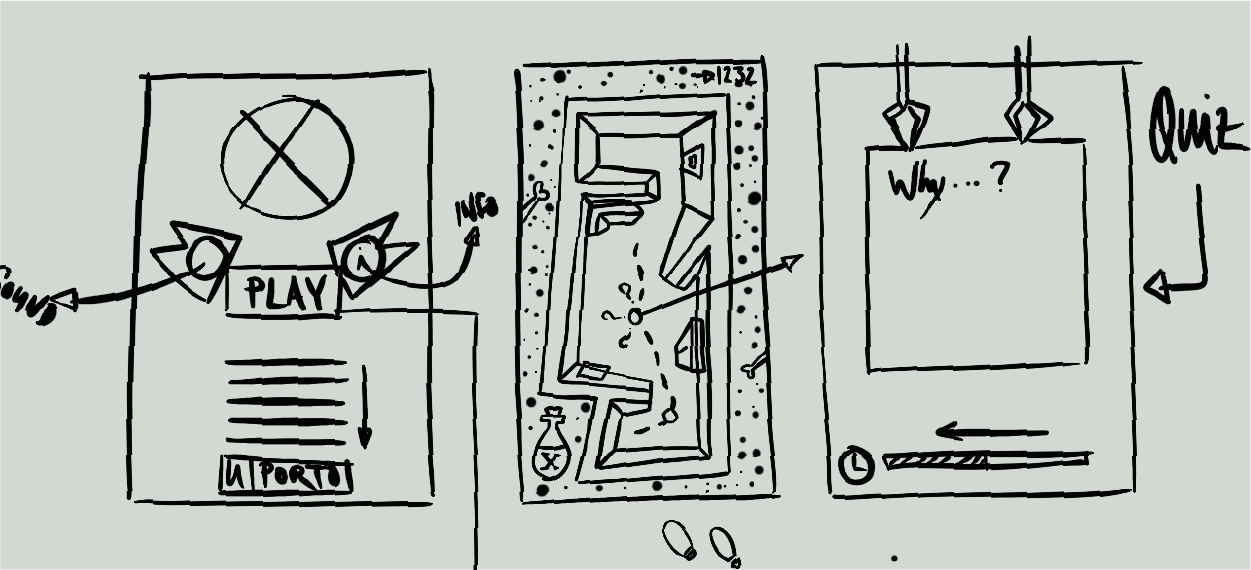
To save Dr Bright from the laboratory, the player has to answer several science questions and, in the end, face Dr Cell in a duel, which will result either in the release of the protagonist or in the obligation to restart the game to get him out of the lab.
 Game design is generally understood to involve techniques that can enhance motivation and scaffold users in the education field, emotionally engaging learners to achieve mastery when based on game theory.
MDA Framework
Mechanics, Dynamics, and Aesthetics (MDA) is a framework that aims to support and “strengthen the iterative processes of developers, scholars, and researchers alike, making it easier for all parties to decompose, study, and design a broad class of game designs and game artefacts” (Hunicke et al., 2004, p. 1).
Game design is generally understood to involve techniques that can enhance motivation and scaffold users in the education field, emotionally engaging learners to achieve mastery when based on game theory.
MDA Framework
Mechanics, Dynamics, and Aesthetics (MDA) is a framework that aims to support and “strengthen the iterative processes of developers, scholars, and researchers alike, making it easier for all parties to decompose, study, and design a broad class of game designs and game artefacts” (Hunicke et al., 2004, p. 1).
 According to this framework, Mechanics are the rules, structures and algorithms that determine player actions and how a game responds. They define what a player can do, how they do it, and the results of those actions, creating a bridge for player interaction and gameplay. Dynamics describes the run-time behaviour of the mechanics, responding to the player’s inputs and the interactions between outputs over time. In other words, it is the player’s behaviours when they interact with the mechanics, and when the mechanics interact with other game mechanics. Aesthetics are the emotional responses evoked in the player while interacting with the game.
 The mechanics generate dynamic system behaviour, which, in turn, results in specific aesthetic experiences. The Mechanics, Dynamics, and Aesthetics (MDA) framework facilitated the understanding of how different game layers impact different levels of the learning experience and how they can work together to create an overall game experience.
The Aesthetics involves layers such as sensation, fantasy, narrative, challenge, fellowship, discovery, expression and submission, while Dynamics aims to create these aesthetic experiences.
The mechanics generate dynamic system behaviour, which, in turn, results in specific aesthetic experiences. The Mechanics, Dynamics, and Aesthetics (MDA) framework facilitated the understanding of how different game layers impact different levels of the learning experience and how they can work together to create an overall game experience.
The Aesthetics involves layers such as sensation, fantasy, narrative, challenge, fellowship, discovery, expression and submission, while Dynamics aims to create these aesthetic experiences.
 Game Dynamics such as narrative arc, fantasy, visual experience, graphical user interface (GUI), and interactive choice are not only one of the most popular forms of human-computer dialogue but also key elements contributing to engagement enhancement and emotions reinforcement impacts in the cognitive process.
However, a few empirical studies have examined how game mechanics and aesthetics can influence emotional connections and enhance people’s engagement from a psychological perspective.
Game Dynamics such as narrative arc, fantasy, visual experience, graphical user interface (GUI), and interactive choice are not only one of the most popular forms of human-computer dialogue but also key elements contributing to engagement enhancement and emotions reinforcement impacts in the cognitive process.
However, a few empirical studies have examined how game mechanics and aesthetics can influence emotional connections and enhance people’s engagement from a psychological perspective.
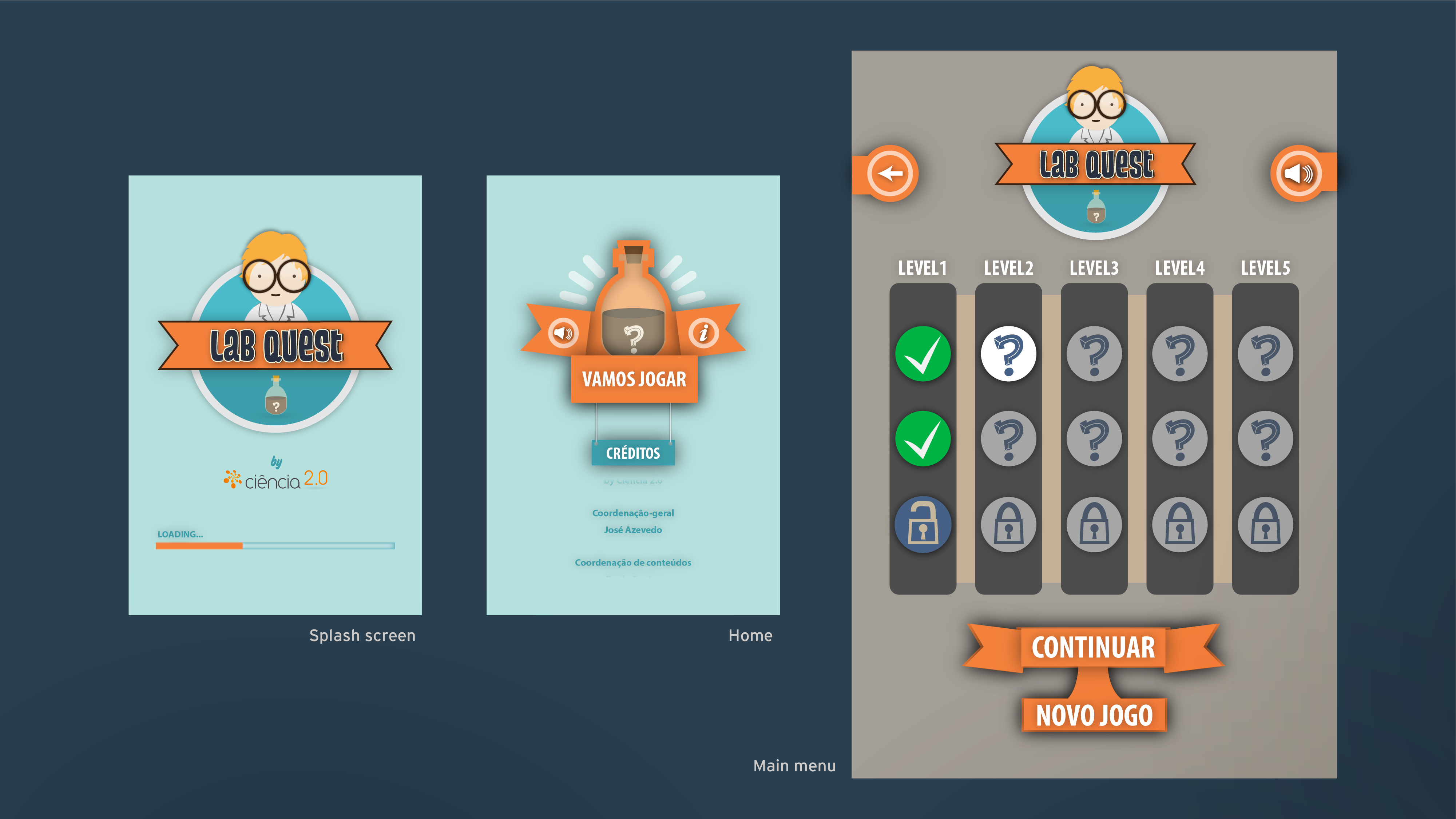
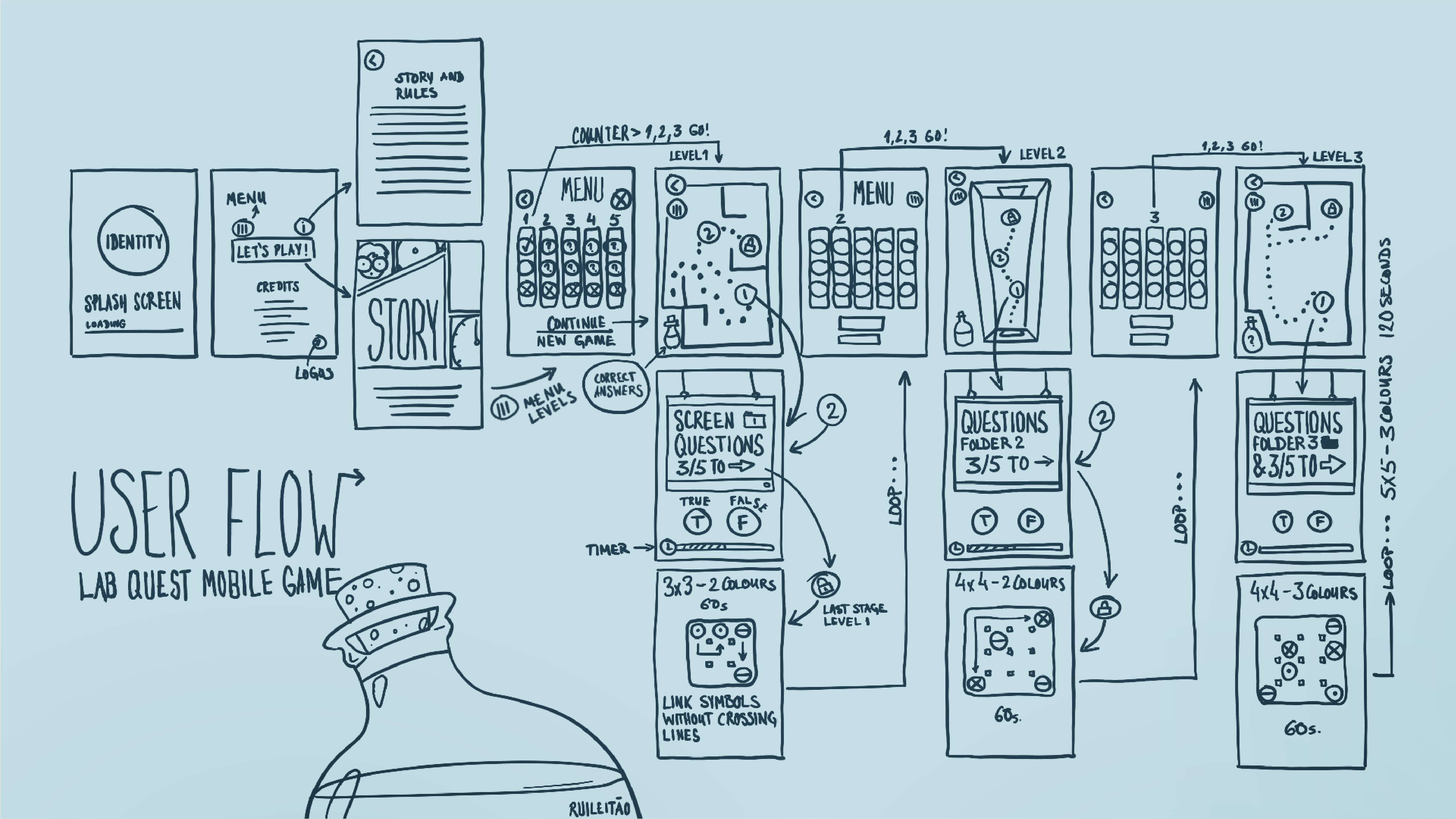
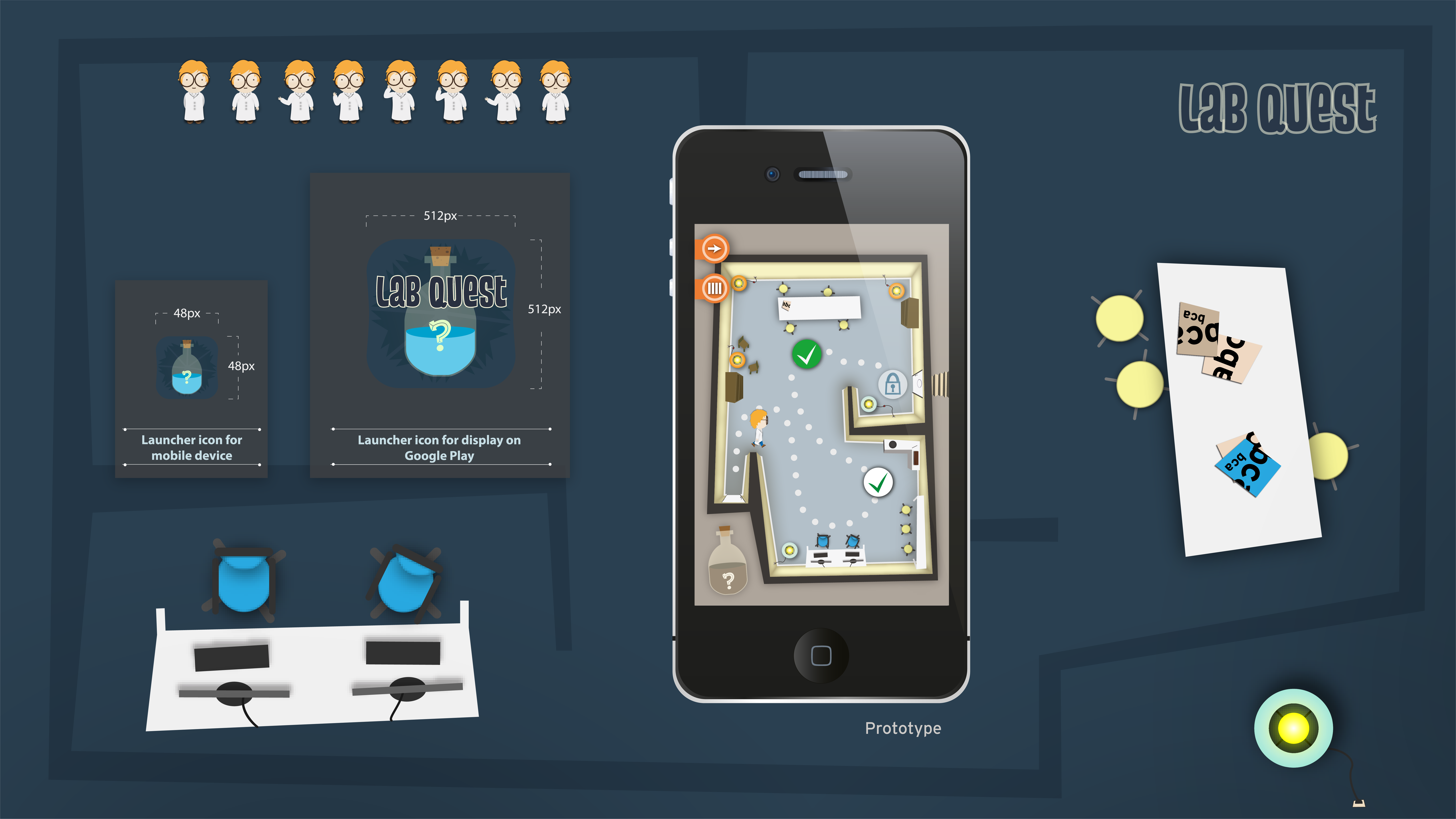 The aim of this project was to develop a mobile game application as a research tool to evaluate its effect on secondary school students' engagement in science.
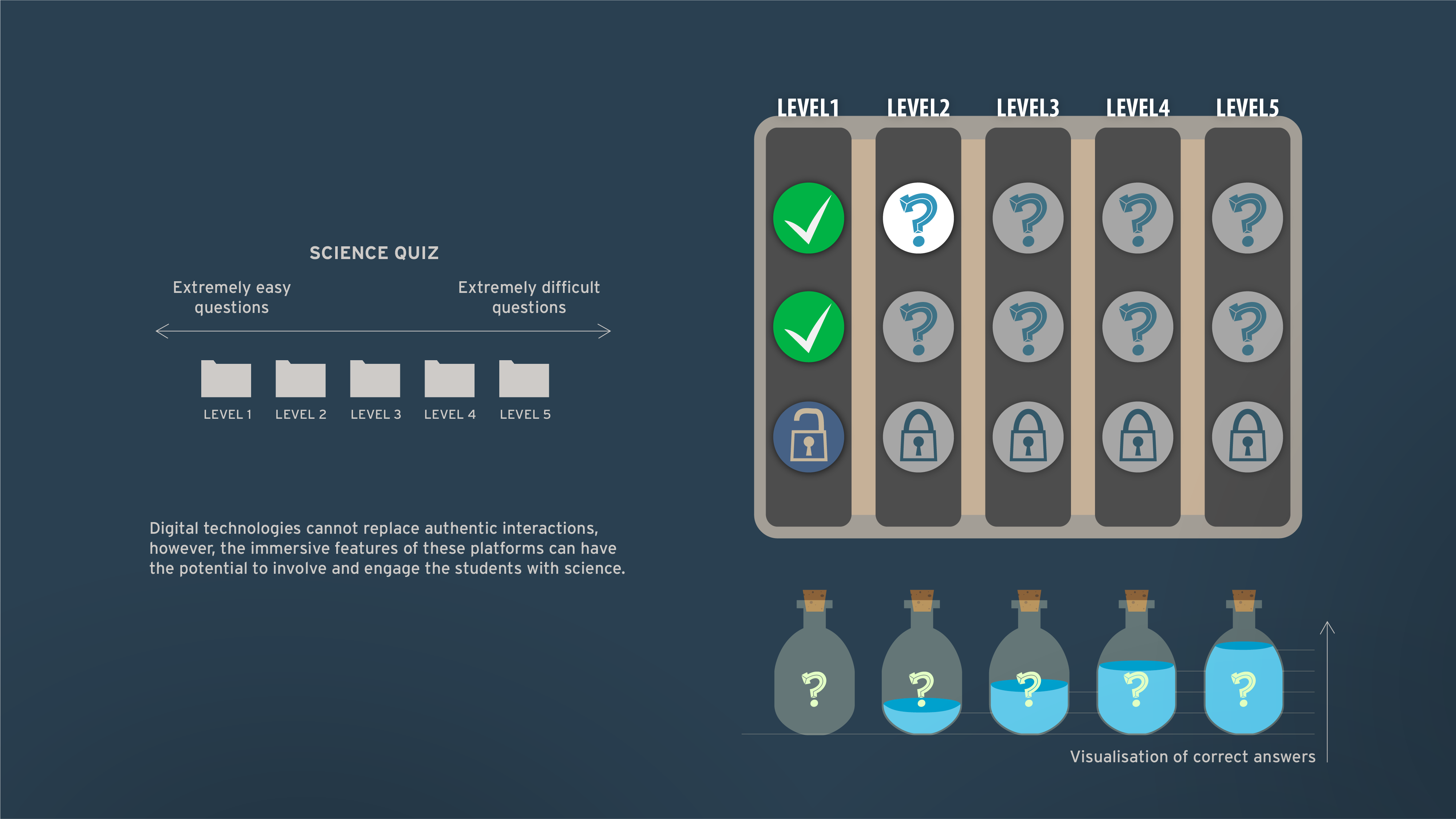
Digital technologies cannot replace authentic interactions, however, the immersive features of these platforms can have the potential to involve and engage the students with science. Teaching and learning can be both enabled and accelerated by digital technology and can take place in environments that support 'deep learning'. As a research tool, LabQuest aimed to involve young people in the scientific field by presenting educational content in playful formats, adding the fun layer.
References
Hunicke, R., LeBlanc, M., and Zubek, R. (2004). MDA: A formal approach to game design and game research. Proceedings of the AAAI Workshop on Challenges in Game AI, 1722.
The aim of this project was to develop a mobile game application as a research tool to evaluate its effect on secondary school students' engagement in science.
Digital technologies cannot replace authentic interactions, however, the immersive features of these platforms can have the potential to involve and engage the students with science. Teaching and learning can be both enabled and accelerated by digital technology and can take place in environments that support 'deep learning'. As a research tool, LabQuest aimed to involve young people in the scientific field by presenting educational content in playful formats, adding the fun layer.
References
Hunicke, R., LeBlanc, M., and Zubek, R. (2004). MDA: A formal approach to game design and game research. Proceedings of the AAAI Workshop on Challenges in Game AI, 1722.